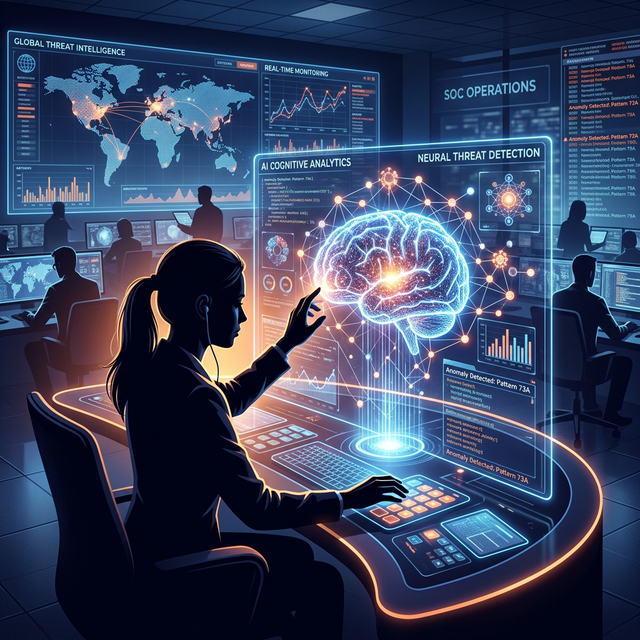
The push towards AI-driven automation in our Security Operations Centres (SOCs) is no longer a luxury—it is necessary for survival. The sheer volume of telemetry generated by modern cloud architectures and endpoint agents makes human-scale analysis impossible. We employ Large Language Models (LLMs) and predictive algorithms to triage, correlate, and even confidently respond to tier-one alerts automatically.
While this sounds like a great success for operational efficiency, it introduces a dangerous, systemic flaw known as the Automation Paradox.
The Cost of Confidence
When algorithms confidently dismiss ninety per cent of alerts as false positives, analysts naturally begin to trust the machine's judgement unconditionally. This "automation bias" is completely understandable from a psychological standpoint. If an analyst has seen an AI correctly categorise a thousand consecutive phishing emails, they have zero incentive to critically evaluate the thousand-and-first.
However, this reliance slowly degrades the innate human intuition that makes a great analyst. It creates a critical vulnerability: if the AI encounters a novel, complex attack technique it hasn't seen before and classifies it as low-risk, the overburdened human analyst is highly likely to agree, simply because the machine said so.
We risk creating teams of rubber-stampers rather than actual investigators. I have sat in incident debriefs where junior analysts missed glaring indicators of compromise because the SIEM's new "AI Risk Score" told them the event was benign. The tool was meant to highlight threats, but instead, it effectively blinded the analyst.
The Loss of Institutional Memory
Furthermore, automated triaging removes analysts from the day-to-day exposure to raw data. The manual grind of evaluating minor anomalies is precisely how analysts develop their "gut feeling"—that deep, unquantifiable understanding of what the network should feel like.
When we black-box the triage process, we accidentally prevent our junior staff from ever developing into senior engineers. They learn how to manage the AI platform, but they never learn how to hunt the adversary.
Re-centring the Human
The objective of AI in the SOC should never be to replace critical thinking, but to augment it. We must shift our perspective from viewing analysts as operators of an AI tool, to viewing the AI as an incredibly fast, but highly junior, colleague.
To achieve this, we must focus on three structural changes:
- Demanding Explainability (XAI): We must design and procure AI interfaces that force the system to show why it made a decision, rather than just presenting a final risk score. If the model determines a login was anomalous, the interface must explicitly state the weighting factors (e.g., "Time of day deviation: High, Geolocation: Standard, Keyboarding pattern mismatch: Extreme").
- Simulated Pressure: We must intentionally inject simulated threats into the live alert queue. This keeps analysts sharp and ensures they are genuinely evaluating context, not just blindly clicking "Approve" on the AI's recommendations.
- Rotating Hunts: Teams must mandate dedicated time where analysts bypass the automated triage completely and drop directly into the raw telemetric lake. Proactive threat hunting is the antidote to automation bias.
Real resilience requires human common sense working alongside machine speed, not being replaced by it. Our job as security leaders is to build environments where the tool serves the engineer, so the engineer can serve the business.
Recommended Reading
- "Ironies of Automation" - Lisanne Bainbridge (1983). A foundational paper showing how automation paradoxically increases the demands placed on the human operator.
- MITRE ATT&CK Framework: Evaluating Defensive Mechanisms - Best practices for balancing automated detection with human response.
- "Security Operations in the Age of AI" - NCSC Advisory Note on safely scaling detection engineering teams.